AT-204 Thermo-Mechanical Properties of Materials
AT-204 Ice -Exercise 4 (volunteer)
The sketch on p. 73 in the compendium indicates items to be considered when estimating ice loads on offshore structures.
|
Delivery: |
Single student work |
|
Date of delivery: |
14.05.99 |
|
Mail to: |
Sveinung.Loset@bygg.ntnu.no |
You are responsible for the ice loads estimations for the ice construction and designing of oil and gas offshore structure.
- You should choose between two types of structure (vertical and conical), then calculate ice loads on each of these structures. Which one is more preferable for Barents and Varandey Sea? What are the differences?
- Which scenario and ice-structure failure mode will you choose for Barents Sea conditions during the winter and summer?
- Which formulas and scenarios are you going to use for:
- Vertical structure (winter/summer)
- Sloping structure (winter/summer)
- Using modified Korzhavin’s formula for vertical structures calculate global ice forces for a 100 m and 80 m diameter structure What assumptions can you make? On vertical structure is it possible to have ice failure in bending or buckling? If so, under which conditions it is possible?
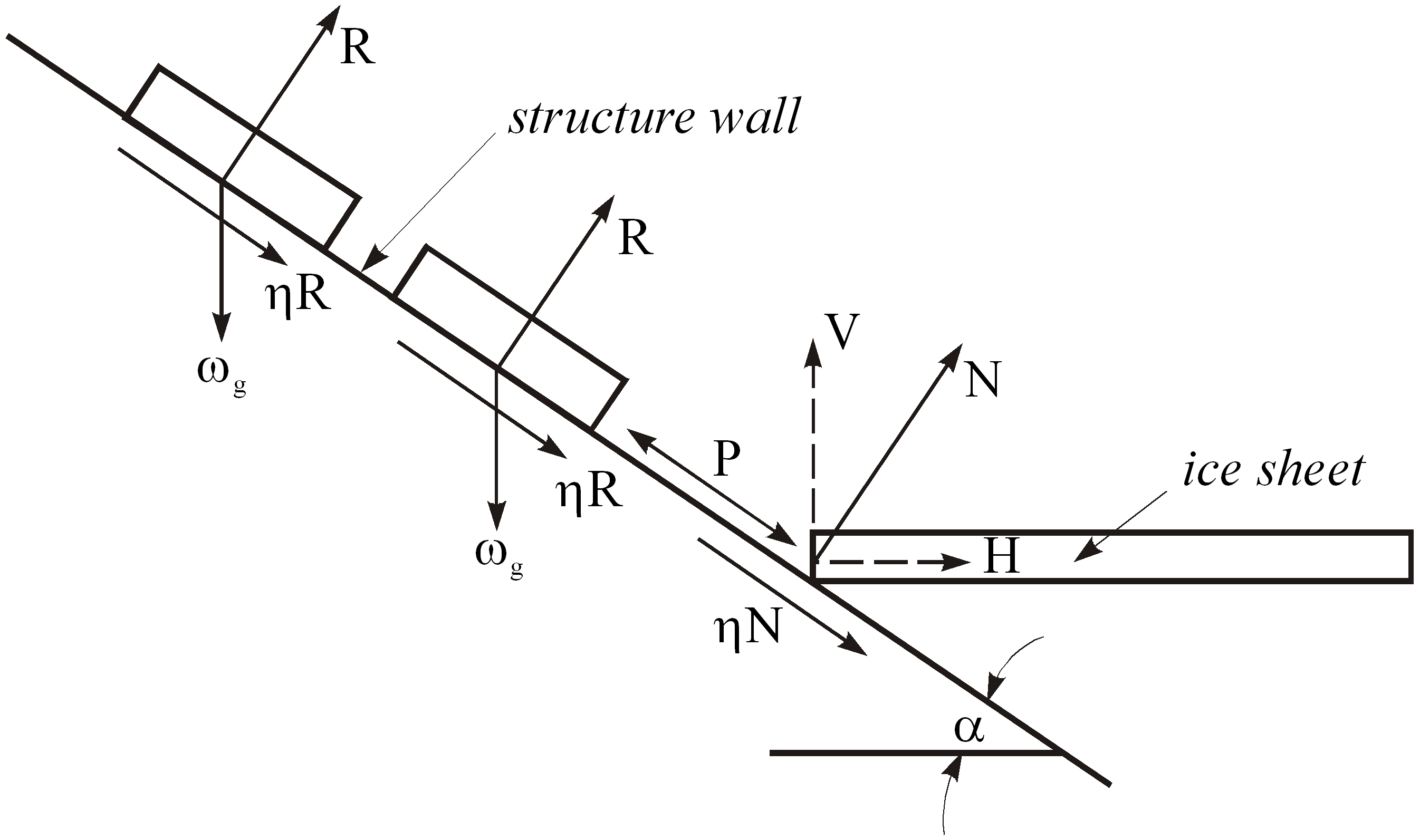
Fig. 1. Interaction between ice and sloping structure.
Calculate ice forces on sloping structure using "FLOE" Matlab program for different cone angles (for example 10, 20, 30 and so on) and waterline diameters (100 m for example). Which theory and analysis do we use in FLOE program? What are advantages and restrictions in applying this theory? Can you find optimal values for angle when vertical forces are equal to horizontal ones? Do the same for cone waterline and top diameter R (Fig.2), which is used for designing of top facilities and accommodations.
AT-204 Ice -Exercise 4 (volunteer)
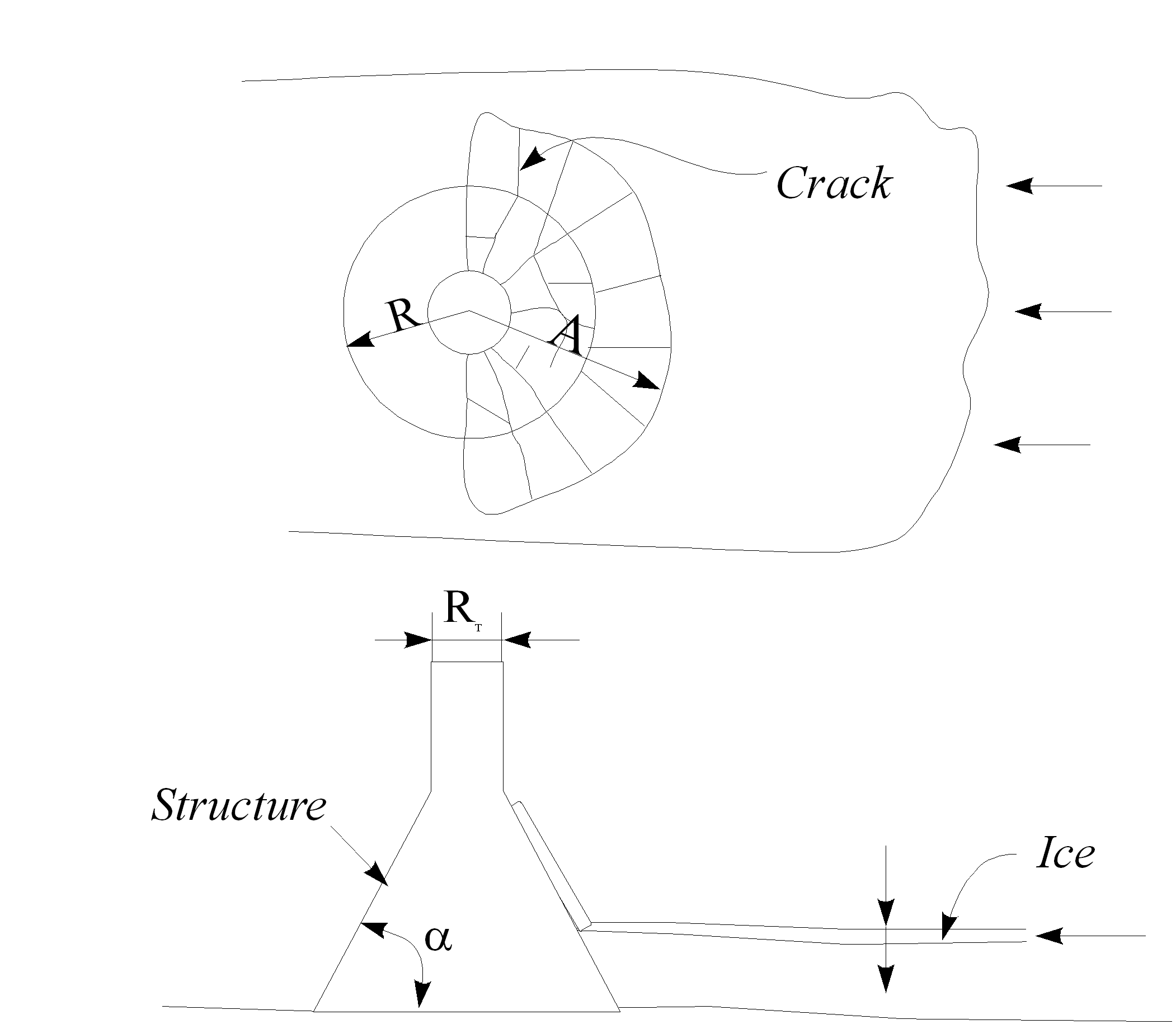
Fig. 2. A three dimensional representation of the ice structure interaction (after Ralston).
- Matlab program is used for ice forces calculations on sloping structure, but you can also use it for vertical structures considering that angle is equal to 90° . Calculate forces acting on vertical structure with help of FLOE program. Why do we have minus sign in horizontal components? Compare these results to the same you have obtained from Korzhavin’s theory. Do you find any discrepancies? Why?
- Why do we need to take into account probabilistic approach when estimating ice loads? What do you think we, as designers, should be aware of?
NOTE: See and use the "FLOE" Matlab program for Task 5 and 6.